

Sawnee Mountain Trail Guide: Beginner to Advanced Hiking


The Sawnee Mountain trail network at Sawnee Mountain Preserve covers more than 5 miles of hiking terrain across 963 acres of protected North Georgia woodland, centered on a summit ridge that Cherokee and Creek peoples used as a sacred lookout for centuries. Located at 4075 Spot Road in Cumming, Georgia, roughly 40 miles north of Atlanta, this preserve offers free admission, free parking, and a trail system that genuinely works for everyone from first-time walkers to hikers looking for a half-day workout with rewarding views of the Blue Ridge Mountains to the north. The signature Indian Seats Trail is a 4-mile moderate loop, but the preserve holds considerably more than that one route, and understanding the full network is what separates a good visit from a great one.
Table of Contents
TL;DR
The Sawnee Mountain trail network spans 5+ miles across 963 acres near Cumming, GA, with the flagship Indian Seats Trail running 4 miles round trip and rated moderately difficult.
Admission and parking are both free; the preserve is open Monday through Saturday, 8:30 a.m. to 5:00 p.m., and no dogs are permitted on any trails.
The summit overlook at 1.9 miles offers views of the Blue Ridge Mountains to the north; the granite Indian Seats were historically used by Cherokee and Creek peoples as sacred lookout points.
Beginners and families with young children do best on the lower loop segments; experienced hikers can combine routes within the network for longer mileage and more elevation gain.
Fall (mid-October) and early spring are the most rewarding seasons; summer mornings before 9 a.m. are the best strategy for beating heat and weekend crowds.
The Soaring Eagle GA cabin in Morganton, Georgia sits approximately 7.3 miles from Sawnee Mountain Preserve, about 16 minutes by car, making it a practical base for multi-day hiking trips in the region.
At The Soaring Eagle GA, we field questions constantly from guests staying at our The Space cabin in Morganton about the best hikes within a short drive. Sawnee Mountain Preserve comes up every time, and for good reason. It delivers a rewarding summit view without requiring a full day or a serious fitness base. But the most-searched trail at the preserve is only part of the story. This guide covers the full picture: every trail segment, difficulty progression, seasonal strategy, photography timing, and the practical details that most trail guides skip entirely.
Whether you are lacing up for your first real hike or looking for a solid half-day workout before returning to a Cabin With Hot Tub Blue Ridge Mountains, Sawnee Mountain rewards the effort. The sections below walk through everything in the order you need it, from initial planning through post-hike considerations.
How Long of a Hike Is Sawnee Mountain?
The most-hiked Sawnee Mountain trail, the Indian Seats Loop, is 4 miles round trip and rated moderately difficult based on distance, terrain, and cumulative elevation change. The summit overlook sits at the 1.9-mile mark, which is where most hikers pause for views and photographs before continuing the loop. Total hike time for the full 4-mile loop runs between 2.5 and 3.5 hours for most adults, depending on fitness level and how long you linger at the summit.
The trail starts at the visitor center on Spot Road and is best hiked counterclockwise: turn left at the Indian Seats Loop intersection rather than right. This approach means you tackle the steeper sections on the ascent when legs are fresh and descend on the gentler gradient, which is easier on knees and ankles, particularly on wet or leaf-covered days.
Key waypoints to track as you go:
Just over 1 mile: A gated gold mine entrance on the right side of the trail, a visible remnant of 19th-century gold mining activity on the mountain.
1.9 miles: The Indian Seats summit overlook with granite rock formations and views to the north and south.
2.4 miles: The Yucca Trail intersection, where hikers can extend their route or continue the main loop.
2.9 miles: A second mine entrance, and access to the southern visitor center and parking area.
3.4 miles: A small knob ascent before the final descent back to the trailhead.
The preserve's total trail network exceeds 5 miles when you include connector paths and the Yucca Trail, so there is room to extend beyond the standard loop if you want more mileage.
What Trails Exist Beyond the Indian Seats Loop?
Sawnee Mountain Preserve is a trail network, not a single path, and the Indian Seats Trail represents only the central spine of a system that totals more than 5 miles of hiking, walking, and running terrain across 963 acres. Most visitor guides cover only the Indian Seats Loop, leaving the full network largely undescribed. Understanding the additional routes is particularly valuable for visitors who want shorter options, families with younger children, or repeat visitors looking for a different experience.
The Yucca Trail branches off the main loop at the 2.4-mile mark and adds a shorter connector that can be used to create a modified loop or an out-and-back variation for those who reach the summit and want a different return path. The Yucca Trail runs through a section of forest with distinct vegetation, including the namesake yucca plants that appear along the rocky slope.
The preserve also maintains easier walking paths near the visitor center and picnic areas, which function more as nature walks than hiking trails. These lower-elevation paths wind through the canopy near the tree canopy classroom and amphitheater area and are well-suited for young children who are not yet ready for the full summit climb.
For runners, the combination of trail segments at Sawnee Mountain offers enough variety to put together a 5-plus mile route with meaningful elevation change. The terrain is rocky and rooted in sections, so trail running shoes rather than road shoes are the right call. Check the Sawnee Mountain Preserve official website for current trail maps and any seasonal route modifications before you go.
What Are the Easiest Options for Beginners and Families?
Beginners and families visiting Sawnee Mountain Preserve have genuinely accessible options, though it is important to set realistic expectations. The lower sections of the trail near the visitor center on Spot Road involve relatively flat, well-maintained paths that work well for younger children and first-time hikers. These segments near the trailhead and picnic areas cover gentle terrain with shade and clear wayfinding, making them comfortable for ages 5 and up.
For families who want to attempt the Indian Seats summit but are uncertain about their group's fitness, the practical strategy is to treat the hike as an out-and-back to the summit at 1.9 miles rather than completing the full loop. At this distance, you log approximately 3.8 miles total and gain the best views the preserve offers. If the group is struggling on the way up, you turn around without needing to commit to the full 4-mile loop.
A few specifics worth knowing before you bring young children:
The terrain near the summit involves exposed granite and some scrambling. Children under 6 should be with an adult who can assist on the rocky sections.
There are no water fountains on the trail itself. Bring more water than you think you need, especially in summer. A good baseline is 16 to 20 ounces per person per hour of hiking.
The preserve's playground and picnic pavilions near the visitor center give younger children a payoff even if they do not complete the full hike.
The 140-seat amphitheater and tree canopy classroom near the entrance are worth a stop on the way back out, particularly for children interested in the nature education programming the preserve offers.
The visitor center itself contains Native American artifacts and interpretive displays that give solid historical context before or after the hike. Plan 20 to 30 minutes for the center, separate from your trail time. For more outdoor activities for every skill level in the region, the complete guide covers family-friendly options throughout North Georgia.

What Should Advanced Hikers Know About Sawnee Mountain?
Experienced hikers sometimes underestimate Sawnee Mountain and arrive undertrained for what the terrain actually demands, or conversely, they treat it as a warm-up and wish they had planned a longer day. The honest assessment: the Indian Seats Loop at 4 miles with its cumulative elevation gain is not a strenuous hike for fit adults, but the rocky, rooted sections near the summit add genuine technical interest that makes the trail more engaging than its moderate rating might suggest.
For those wanting more mileage, the best approach in 2026 is to combine the full Indian Seats Loop with the Yucca Trail connector and lower preserve paths to push total distance toward 5 to 6 miles. The preserve does not currently offer a marked extended backcountry route, so experienced hikers wanting 8-plus miles with significant elevation should treat Sawnee Mountain as a warm-up and plan a second trail in the region for the same day.
North Georgia offers strong options within a reasonable drive. The Blue Ridge Mountain hikes guide covers routes near Morganton and Dahlonega with significantly more elevation gain for hikers who have already conquered Sawnee and are ready for a longer challenge. Amicalola Falls State Park, approximately 14.2 miles from the Soaring Eagle GA cabin, offers the 8.5-mile approach trail to Springer Mountain that serves as the Appalachian Trail's southern terminus.
One detail experienced hikers will appreciate: the preserve's trail surface changes character meaningfully at different points. The lower sections are compacted gravel and packed dirt, smooth and straightforward. Above the mine entrance at the 1-mile mark, the trail becomes progressively rockier with exposed root systems. The final approach to the Indian Seats involves open granite slabs. Each of these transitions demands different footwork, and hiking poles are genuinely useful on the descent regardless of your experience level.
What Is the Hardest Hike in Georgia?
The hardest hike in Georgia, by most measures, is the approach to Brasstown Bald via the Jack's Knob Trail, which gains roughly 1,000 feet of elevation over 4.5 miles to the state's highest point at 4,784 feet. Other contenders include the Blood Mountain Loop via the Appalachian Trail in Lumpkin County and the full Springer Mountain approach from Amicalola Falls, which covers 8.5 miles with sustained climbing. These routes stand in clear contrast to the Sawnee Mountain trail, which is moderate rather than strenuous.
For context, Sawnee Mountain sits at a lower elevation base than the North Georgia peaks and offers a total trail network designed for accessibility rather than challenge. The Indian Seats Loop earns its moderate rating honestly: it is not a casual walk, but it will not test the limits of a reasonably fit adult. Hikers who find Sawnee Mountain comfortable and want to graduate to something more demanding should look toward the Blue Ridge Mountain hikes ranked by views and difficulty for a logical progression of trail challenges in the same region. You can also explore Waterfall Hikes of North Georgia: Trail Conditions, Fees & Photo Tips for additional challenging routes with scenic payoffs.
That progression matters for safety as well as satisfaction. Jumping from a moderate trail like Sawnee directly to Blood Mountain or Brasstown Bald without intermediate experience creates real risk, particularly in summer heat or when weather moves in quickly. Build mileage and elevation confidence incrementally, and Sawnee Mountain is an excellent starting point in that progression.
What Is the Most Beautiful Mountain View in Georgia?
Georgia's most celebrated mountain views consistently include the summit panorama from Brasstown Bald, the ridge view from Blood Mountain looking north across the Blue Ridge, and the overlook at Amicalola Falls. The Indian Seats summit at Sawnee Mountain Preserve belongs in a separate but worthy category: it is not Georgia's most dramatic high-elevation vista, but it delivers one of the most accessible and historically layered summit views in the northern part of the state.
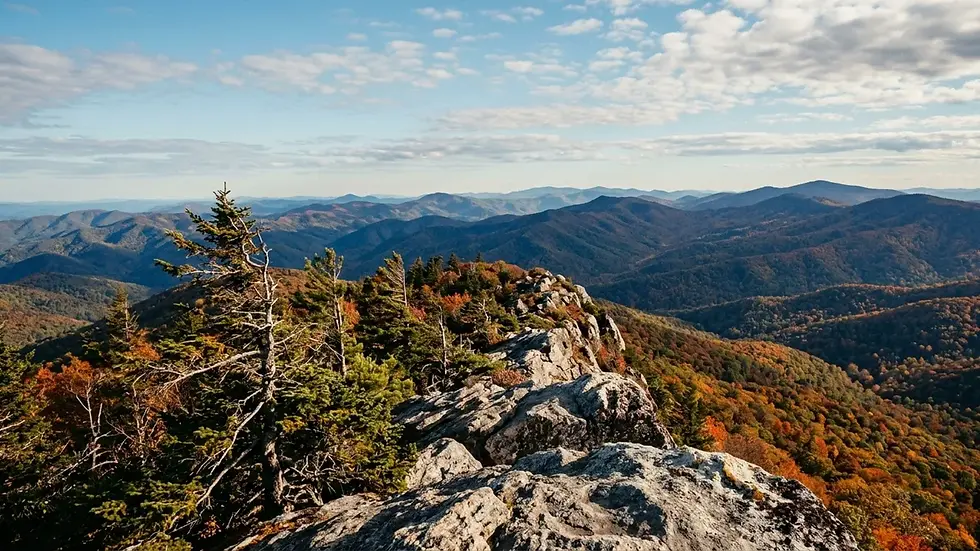
From the Indian Seats, you see the Blue Ridge Mountains extending to the north and the valley spreading to the south. The windswept conifers that line the rocky ridge give the summit a character that feels distinctly different from the forest below. On clear mornings, especially in October after the first cold fronts have scrubbed the air, the view north toward the Blue Ridge is genuinely striking.
What makes the Indian Seats view memorable beyond the scenery is the setting itself. The natural granite depressions in the rock formation at the summit were used by Cherokee and Creek peoples as seats for lookouts and meditation, and interpretive signs along the trail explain this history. Sitting in these stone formations with the valley below carries a weight that a generic overlook does not. You are standing at a site that has served as a vantage point for human beings for generations, and the view is essentially unchanged from what they would have seen.
For photography, the summit faces northeast, which means morning light falls across the ridge in a way that makes early starts worthwhile. Arrive by 8:30 a.m. when the preserve opens and you will hit the summit with good directional light and significantly fewer people than you would encounter after 10 a.m. on a weekend. Photographers planning the full trip can also check out Fall Branch Falls Blue Ridge: Complete Hiker's Guide (2026) for additional scenic North Georgia shooting locations.
How Long Does It Take to Visit the Indian Seat?
A complete visit to the Indian Seat overlook at Sawnee Mountain Preserve, including the drive from the parking area, the hike to the summit, time at the top, and return, takes most visitors between 2.5 and 4 hours total. The hike itself runs 3.8 to 4 miles depending on the route, with the summit at the 1.9-mile mark. Moderately fit adults who are not rushing typically reach the summit in 60 to 75 minutes from the trailhead.
Add time for the following if you want the full experience:
Visitor center: 20 to 30 minutes for the displays, Native American artifacts, and the preserve's conservation history.
Summit time: 15 to 30 minutes is typical for most hikers. If you are there for photography or a meal, plan 45 to 60 minutes.
Lower paths and amenities: The playground, picnic pavilions, and amphitheater area add 20 to 40 minutes for families with children.
If you are driving from Atlanta, budget an additional 45 to 60 minutes each way depending on traffic. The preserve is 40 miles north of Atlanta near Cumming, and Interstate 400 north is the primary approach. Arriving at 8:30 a.m. when the gates open avoids the weekend rush that builds noticeably after 10 a.m., particularly during fall foliage season.
From the Soaring Eagle GA cabin in Morganton, the drive to Sawnee Mountain Preserve runs approximately 7.3 miles, about 16 minutes, making it a quick morning excursion that leaves the afternoon free for other Things To Do In Morganton Georgia.
When Should You Visit Sawnee Mountain for the Best Experience?
Seasonal conditions at Sawnee Mountain Preserve shift meaningfully across the year, and choosing the right window dramatically affects both the experience and the logistics. Each season offers something genuinely distinct, and the honest answer to "when to go" depends on what you are optimizing for.
Fall (Mid-October is Peak)
The second and third weeks of October bring the preserve's most popular period, and for good reason. Red maples, dogwoods, and sweetgums on the lower slopes turn before the oaks, creating a layered progression of color that starts in the canopy gaps and fills in over two to three weeks. Family photography at the Indian Seats is at its most rewarding during this window. The trade-off: weekend crowds are real, and the parking lot fills by 9 a.m. on October Saturdays. Go on a weekday or arrive at opening to get the summit to yourself. Check the weekly fall color updates at Blue Ridge Mountain Life for real-time progression tracking.
Spring (March through May)
Spring brings wildflowers, including trillium and mountain laurel on the lower slopes, and the absence of summer humidity makes the climb considerably more comfortable. Pollen counts in North Georgia run high from late February through April, which is relevant for anyone with seasonal allergies. Bring antihistamines if pollen is a concern, as the trail runs through heavy hardwood canopy. Late April and May, after the peak pollen window, offer excellent conditions with full leaf-out and moderate temperatures.
Summer (June through August)
Summer is manageable but requires strategy. Temperatures at the summit can feel 5 to 8 degrees cooler than the valley, but the approach through the forest is humid and warm. Start before 8:30 a.m. if possible, complete the summit section before 11 a.m., and carry at least 32 ounces of water per person. The trail offers significant shade through the hardwood canopy for most of its length, which makes summer more approachable than fully exposed mountain hikes elsewhere.
Winter (November through February)
Winter is genuinely underrated at Sawnee Mountain. Leaf-off improves views throughout the lower trail sections that are obscured in summer, and weekday crowds essentially disappear. The trail surface can be slippery after rain or frost, so traction devices or hiking poles are worth packing for any visit between December and February. The preserve stays open year-round on its standard schedule, weather permitting. Visitors planning a winter trip can pair the hike with a stay at a Georgia romantic log cabin getaway with a hot tub for the ideal cold-weather recovery.

Where Are the Best Photography Spots on the Trail?
Sawnee Mountain Preserve is one of the most photographed natural sites in the greater Atlanta region, and the trail offers several distinct shooting locations rather than a single payoff at the top. Understanding where each opportunity sits on the route helps you arrive prepared with the right timing and gear.
The Gold Mine Entrance (1-Mile Mark)
The gated mine entrance just past the 1-mile marker is a frequently overlooked subject. The rusted iron gate set into a rock face covered in lichen makes a strong textural foreground with the forest receding behind it. Mid-morning light filters through the canopy at this elevation in a way that works well even on partly overcast days. This is a detail shot rather than a wide scene, but it adds historical depth to any trail photography portfolio.
The Indian Seats Summit (1.9-Mile Mark)
The granite depressions of the Indian Seats are the obvious primary subject at the summit, and they work best in two distinct ways. Wide shots showing the rock formations against the distant Blue Ridge ridgeline to the north require a wide-to-normal lens and benefit from early morning or late afternoon directional light. Portrait and lifestyle shots using the natural stone seats as foreground anchor work well throughout the day because the granite is north-facing and avoids harsh direct overhead sun. Fall is the strongest season for this location because the foliage on the slopes below turns the middle ground into a color layer between the granite and the sky.
The Rocky Ridge Near the Summit
The windswept conifers that line the ridge just below the Indian Seats are distinctive enough to function as a strong compositional element. These trees, shaped by ridge wind exposure into compact, leaning forms, create a textural contrast with the open granite that reads well in both color and black-and-white processing. This section of trail is also where you get the clearest north-facing sight lines toward the Blue Ridge.
For guests planning a photography trip from the region, the Soaring Eagle GA cabin at nearly 2,700 feet elevation provides its own panoramic Blue Ridge views from the wraparound deck that function as both a morning warm-up location and a post-hike sunset setting. The combination of summit shooting at Sawnee and deck photography at golden hour covers a wide range of landscape and lifestyle subjects in a single day. Explore Blue Ridge Hidden Gems Locals Actually Keep to Themselves for additional off-the-beaten-path photography locations nearby.
What Should You Bring and How Should You Prepare?
Preparation for the Sawnee Mountain trail is straightforward because the hike is moderate and well-maintained, but several items make a genuine difference between a comfortable visit and an uncomfortable one. The following recommendations are specific to this trail's conditions rather than generic hiking advice.
Footwear
Trail runners or light hiking shoes with rubber lug soles are the right call. Road running shoes will feel unstable on the rocky summit approach. Full leather hiking boots are not necessary and will feel heavy on a 4-mile route. The key requirement is grip on exposed granite, which becomes slippery when wet regardless of the overall shoe quality.
Water and Food
There are no water sources on the trail and no fountains past the visitor center. Bring a minimum of 32 ounces per person for the full loop in mild weather, and 48 to 64 ounces in summer. The hike to the summit and back takes 2 to 2.5 hours, which is long enough to get genuinely thirsty without water. A small snack for the summit is worth including, particularly for children. The picnic pavilions near the visitor center are the right place for a post-hike meal rather than on the trail itself.
Gear Checklist
Water (32 oz minimum per person, more in summer)
Trail running shoes or light hiking shoes with rubber soles
Trekking poles (optional, but useful on the rocky descent)
Sunscreen (the summit is exposed granite with no shade)
Insect repellent (late spring through September)
Light rain layer (afternoon thunderstorms are common June through August)
Fully charged phone with downloaded trail map for offline use
Small snack or energy bar
For gear beyond the basics, Osprey Day Packs at Trailful Outdoor Co, a locally owned hiking outfitter in Hiawassee, GA, carries a well-curated selection of trail daypacks suited to moderate hikes like Sawnee Mountain. Online ordering is available if you prefer to plan ahead before your trip.
Navigation
The trail is well-signed and the Indian Seats Loop is easy to follow if you remember to turn left at the loop intersection rather than right. That said, downloading the trail map for offline use before you arrive is worth the 30 seconds it takes. Cell signal in the parking lot and lower trail sections is typically adequate, but it can be unreliable at the summit. The Atlanta Trails interactive map search includes Sawnee Mountain Preserve and works well for pre-trip planning and route visualization.
Is the Sawnee Mountain Trail Safe for Everyone?
The Sawnee Mountain trail is accessible to a wide range of fitness levels and ages, but several specific conditions are worth knowing before you go. This section addresses the most common concerns in plain language so you can make an honest decision about the hike for your group.
Physical Fitness Level: The Indian Seats Loop is rated moderately difficult and includes sections of sustained uphill walking on rocky terrain. Anyone who walks regularly and can handle stairs without discomfort should manage the full loop. If your group includes individuals who rarely exercise or who experience knee or hip pain on inclines, plan to turn around at the summit and return the way you came rather than completing the loop.
Children Under 5: The rocky granite sections near the summit require careful footing and some light scrambling. Children under 5 should be carried or held by hand on the upper trail. The lower preserve paths and picnic areas are appropriate for toddlers without these concerns.
Weather Risks: Summer afternoon thunderstorms in North Georgia can move in quickly. If you see dark clouds building to the west in the early afternoon, get off the exposed granite summit ridge before lightning is a possibility. The granite rock formations at the Indian Seats are fully exposed with no shelter. A good rule is to begin your descent by 1 p.m. in summer to avoid afternoon storm windows.
Wet and Cold Conditions: The granite slabs near the summit become genuinely slippery when wet, and the leaf-covered lower trail in fall and winter can be equally treacherous. If recent rain has occurred, trekking poles and shoes with strong lug soles are not optional; they are the difference between a comfortable hike and a fall.
Heat: Summer heat at lower elevations in North Georgia is serious. Signs of heat exhaustion include heavy sweating, weakness, and nausea. If anyone in your group shows these symptoms, stop in the shade, drink water, and rest before continuing. The hike is not worth a medical emergency. Start early, bring more water than you think you need, and know your group's limits honestly.
Who Should Check with a Doctor First: If you or someone in your group has a heart condition, a recent joint injury, or severe respiratory issues, talk to your doctor before attempting the Indian Seats Loop. The moderate sustained climbing is meaningful over 4 miles, and the summit offers no quick exit route. The lower preserve paths are a reasonable alternative for anyone with mobility concerns.
Practical Visitor Information: Parking, Hours, and Rules
Sawnee Mountain Preserve is an unusually accessible hiking destination because it charges nothing for admission or parking. The facts below are verified from the preserve's official information and Georgia's state tourism board listing, and they are accurate as of 2026.
Detail | Information |
Address | 4075 Spot Road, Cumming, GA 30040 |
Phone | (770) 781-2217 |
Hours | Monday through Saturday, 8:30 a.m. to 5:00 p.m. |
Admission | Free |
Parking | Free, on-site at Spot Road trailhead and southern visitor center |
Dogs Allowed | No. Dogs are not permitted on any trails at Sawnee Mountain Preserve. |
GPS Coordinates | 34.254750, -84.138933 |
Preserve Size | 963 acres |
Trail Distance | 5+ miles total trail network |
Which Parking Area Should You Use?
The preserve has two parking areas: the primary trailhead at the visitor center on Spot Road, and a secondary lot at the southern visitor center accessed from a separate road. For hikers tackling the Indian Seats Loop, start at the Spot Road lot. It puts you at the visitor center for restrooms, maps, and the interpretive displays, and positions you for the counterclockwise loop direction that most trail guides and the preserve itself recommends.
The southern lot is useful if the Spot Road lot is full during peak weekends, and it connects to the 2.9-mile waypoint on the loop, allowing hikers to pick up the trail from a different entry point. This secondary access is worth knowing for fall weekends when the main lot fills before 9 a.m.
The No-Dogs Policy
The no-dogs rule at Sawnee Mountain Preserve is firm and applies to all trails within the preserve's boundaries, not just the summit section. This catches many hikers off guard because the preserve feels informal and welcoming in most other respects. If you are traveling with a dog and looking for pet-friendly North Georgia hiking options, the dog-friendly vacation rentals and trail-ready hiking guide for Georgia covers alternatives that welcome dogs, including routes near the Morganton area.
For guests staying at the Soaring Eagle GA cabin, which is pet-friendly with no breed restrictions, Sawnee Mountain is an option for human-only day trips while your dog enjoys the outdoor space back at the property. The 7.3-mile drive from the cabin to the preserve makes it easy to complete the hike and return in time for the afternoon. For more ideas on what to do after your hike, browse the full list of Things To Do In Morganton Georgia to plan your evening.
Amenities on Site
Visitor center with Native American artifacts and conservation history displays
140-seat outdoor amphitheater available for small group events
Tree canopy classroom
Climbing area
Playground for young children
Two picnic pavilions
Nature education programs including rock climbing, canoeing, and kayaking instruction
Confirm current program schedules directly through the Sawnee Mountain Preserve official website, as class availability and seasonal programming change throughout the year.
Wildlife and Flora to Expect
The preserve's 963 acres support a mix of hardwood forest, rocky ridge habitat, and open granite outcroppings that each host distinct species. White-tailed deer are frequently spotted on the lower trail sections, particularly in early morning. Red-tailed hawks and turkey vultures are common overhead sightings from the summit ridge. The rocky summit sections host eastern fence lizards, which are fast-moving and easy to miss but common during warm months.
Botanically, the lower trail features native mountain laurel that blooms in late April and May, along with trillium in spring and various fern species throughout the canopy. The yucca plants along the Yucca Trail are an unusual sight in a North Georgia hardwood forest and are worth noting when you reach that section of the trail at the 2.4-mile mark. Interpretive signs along the route identify key species, though carrying a plant identification app adds meaningful depth to the experience for anyone interested in the botanical side of the hike.
Planning Your Visit: Final Thoughts
The Sawnee Mountain trail system is one of North Georgia's most rewarding accessible hikes, combining a genuine summit experience, layered historical significance, and a 5-plus mile network that offers more variety than most visitor guides cover. The Indian Seats Loop at 4 miles gives you the full experience: a gold mine remnant, a Cherokee and Creek sacred site at the summit, views north toward the Blue Ridge, and a trail surface that changes character meaningfully as you climb. Admission and parking are free, the visitor center adds educational depth, and the preserve's location 40 miles north of Atlanta makes it one of the most convenient quality hikes in the region. As of 2026, the preserve remains one of the few genuinely free natural experiences in the greater Atlanta area that delivers summit-level views without a long drive.
Go counterclockwise, turn left at the Indian Seats Loop intersection, bring more water than you think you need, and plan to arrive by 8:30 a.m. on weekends if you want the summit to yourself. Do those four things and Sawnee Mountain will exceed your expectations. For hikers ready to extend their North Georgia adventures beyond Sawnee, the Blue Ridge Mountain activities guide covers the region's full range of outdoor experiences within a day's reach of the preserve. You can also read The Complete Travel Guide to North Georgia's Blue Ridge Mountains for deeper trip planning across the entire region.

If you are building a multi-day hiking trip around Sawnee Mountain and the wider North Georgia trail network, the Soaring Eagle GA cabin sits 7.3 miles from the preserve, perched at nearly 2,700 feet with panoramic Blue Ridge views from the wraparound deck. After a day on the trail, the Wood Burning Fireplace and hot tub with its mountain overlook is a different kind of summit view entirely. Check availability and plan your dates here.
Frequently Asked Questions About Sawnee Mountain Preserve
Are dogs allowed on the Sawnee Mountain trail?
No. Dogs are not permitted on any trails at Sawnee Mountain Preserve. This policy applies to all sections of the trail network, including the Indian Seats Loop and the lower preserve paths near the visitor center. If you are hiking with a dog, you will need to choose a different North Georgia trail that allows pets.
Is the Indian Seats Trail at Sawnee Mountain suitable for young children?
The lower trail sections are appropriate for children ages 5 and up with adult supervision. The summit area involves exposed granite and some light scrambling that requires children under 6 to be assisted by an adult. Families with very young children do well on the paths near the visitor center and picnic pavilions rather than the full summit loop.
How much does it cost to visit Sawnee Mountain Preserve?
Admission to Sawnee Mountain Preserve is free. Parking at both the Spot Road trailhead and the southern visitor center is also free. There is no entrance fee for the trails, visitor center, or any of the preserve's amenities including the amphitheater, playground, and picnic pavilions.
What are the hours for Sawnee Mountain Preserve?
The preserve and visitor center are open Monday through Saturday from 8:30 a.m. to 5:00 p.m. The preserve is closed on Sundays. Trail access requires arriving before 5:00 p.m., and the full Indian Seats Loop takes 2.5 to 3.5 hours, so plan your start time accordingly.
What is the historical significance of the Indian Seats at Sawnee Mountain?
The Indian Seats are natural granite depressions in the rock at the summit of Sawnee Mountain, historically used by Cherokee and Creek peoples as seats for lookouts and meditation. The mountain also has 19th-century gold mining history, evidenced by two gated mine entrances visible along the trail at the 1-mile and 2.9-mile marks. The visitor center contains Native American artifacts and displays covering this history.
Can I visit Sawnee Mountain Preserve on a Sunday?
No. Sawnee Mountain Preserve is closed on Sundays. The preserve operates Monday through Saturday from 8:30 a.m. to 5:00 p.m. Plan your visit for a weekday or Saturday, with early morning starts recommended on weekends to avoid crowds during peak seasons.
What is the best parking strategy at Sawnee Mountain Preserve?
For the Indian Seats Loop, use the primary trailhead parking at the visitor center on Spot Road. Arrive by 8:30 a.m. on fall weekends, as the lot fills by 9 a.m. during October. If the Spot Road lot is full, the secondary lot at the southern visitor center provides access at the 2.9-mile waypoint on the loop and is consistently less crowded than the main entrance.


Comments